絶滅危惧種のコウテイペンギンの今シーズン初産卵を確認! ~ 昨年、世界初の有精卵を確認した「人工授精」プロジェクトも継続 ~
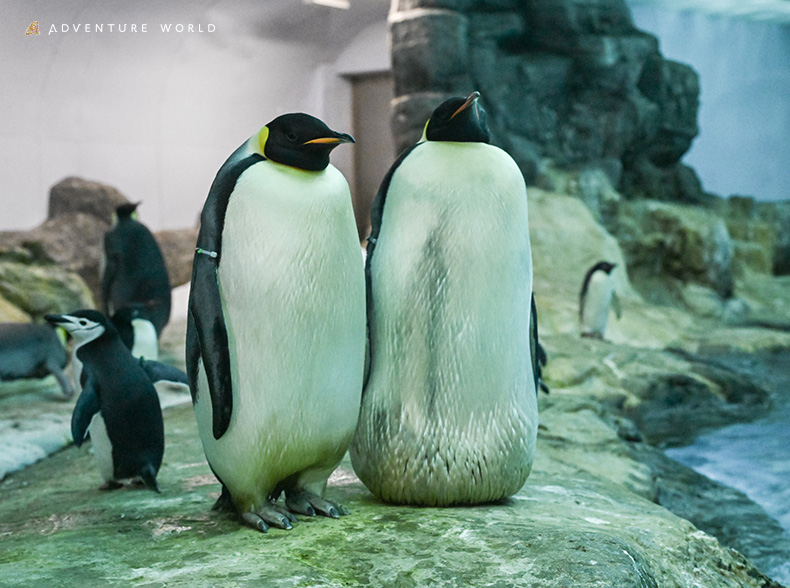
At Adventure World—the only place in Japan home to 470 penguins of 10 different species—the first emperor penguin egg of the season has been confirmed. The egg was laid by the pair (male: E005, female: E014), who are the parents of the chick (E044) that hatched last year—marking the first successful hatching in four years.Furthermore, to maintain the genetic diversity of the species and ensure the survival of these animals for future generations, the park continues its breeding research using artificial insemination and has already begun a new initiative this season. As of August 4, 2026, a total of five eggs have been confirmed, including those laid by other pairs.
Just as Emperor Penguins “huddle” together in the bitter cold to protect their lives, we are promoting the “38°C MIRACLE Project” starting this season, driven by the belief that safeguarding the future of penguins leads to safeguarding the future of people, animals, nature, and the entire planet. Emperor penguins are designated as an endangered species and are a rare species kept in captivity in only three countries worldwide (the United States, China, and Japan); their breeding is extremely difficult on a global scale. While our park has been working to establish breeding techniques, the path to the birth of new life is by no means smooth. We hope for a safe hatching in the future and would like to share information about this egg-laying and our artificial insemination efforts.
[Key Points]
1. The pair “E005 and E014,” parents of last year’s baby (E044), laid their first eggs of the season. If future tests confirm these are fertilized eggs, they are expected to hatch around the end of September, assuming all goes well.
2. Building on last year’s achievement—the world’s first (according to our park’s research) confirmation of fertilized eggs resulting from artificial insemination—we have performed artificial insemination again this season (E007 and E004).
3. A total of five eggs have been confirmed laid so far this season. The laying dates were July 23, July 28, July 29, July 30, and August 4.
4. Emperor penguin breeding is extremely difficult, and while the harsh reality is that the park’s overall fertilization rate is low at approximately 28%, we continue to strive to improve our techniques.
■ Facing the Harsh Reality: Long-Term Breeding Research and the Challenges of Emperor Penguin Breeding
Our park began breeding research on Emperor Penguins in 1997 and, in 2004, succeeded in the birth of a chick—the first in Japan (and only the second in the world).Initially, we ensured the survival of the chicks through “full artificial rearing,” in which staff members acted as surrogate parents. However, aiming for natural rearing by the parent birds, we evolved our techniques to “early artificial rearing,” in which chicks are returned to their parents after hatching. In 2013, we succeeded for the first time in having the parent birds feed their own chicks.Thanks to our relentless research and track record to date, we have carried many lives forward into the future, culminating in the birth of the 16th chick last year (2025).
However, emperor penguins are a species that requires highly advanced breeding techniques, and the probability that a laid egg will hatch successfully is by no means high. Even based on our park’s long-standing research and track record, the probability that a laid egg is fertilized is [approximately 28%], and the probability that a fertilized egg will hatch is only [approximately 74%].Laying an egg does not guarantee a birth; there is always the possibility of developmental arrest (when the process by which a fertilized egg undergoes repeated cell division to become an individual is halted) or the egg being unfertilized. However, we do not turn a blind eye to this harsh reality; instead, we pour our many years of accumulated husbandry expertise into maximizing the potential of every single life.
■Regarding the First Egg Laid This Season
・Date of Laying: July 23, 2026(Thu)
・Pair Information: Male E005, Female E014
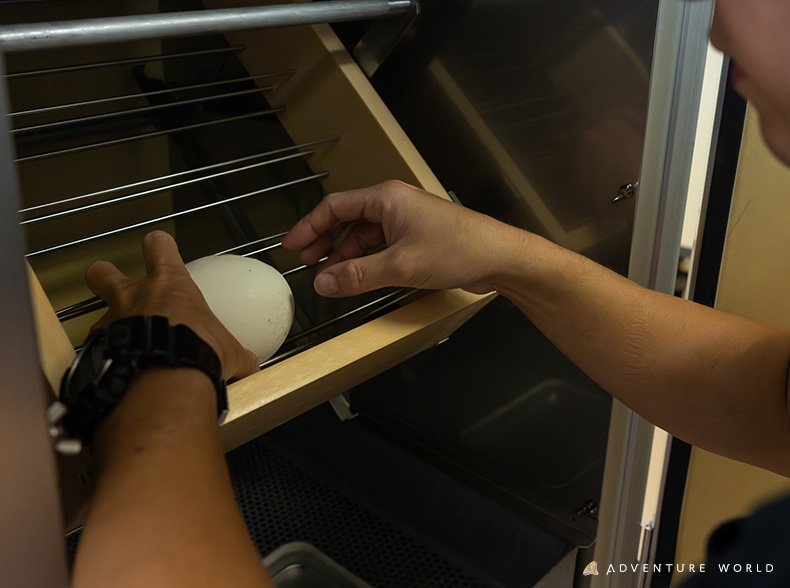
The pair that gave birth to “E044”—the first baby born at our park in four years—last year (2025) has laid the first egg of this season. We have taken the laid egg from the parents, are carefully incubating it in an incubator, and are continuing to monitor it closely in anticipation of future egg examinations to confirm whether it is a fertilized egg.
■ 種の保存へ向けた「人工授精」への絶え間ない挑戦
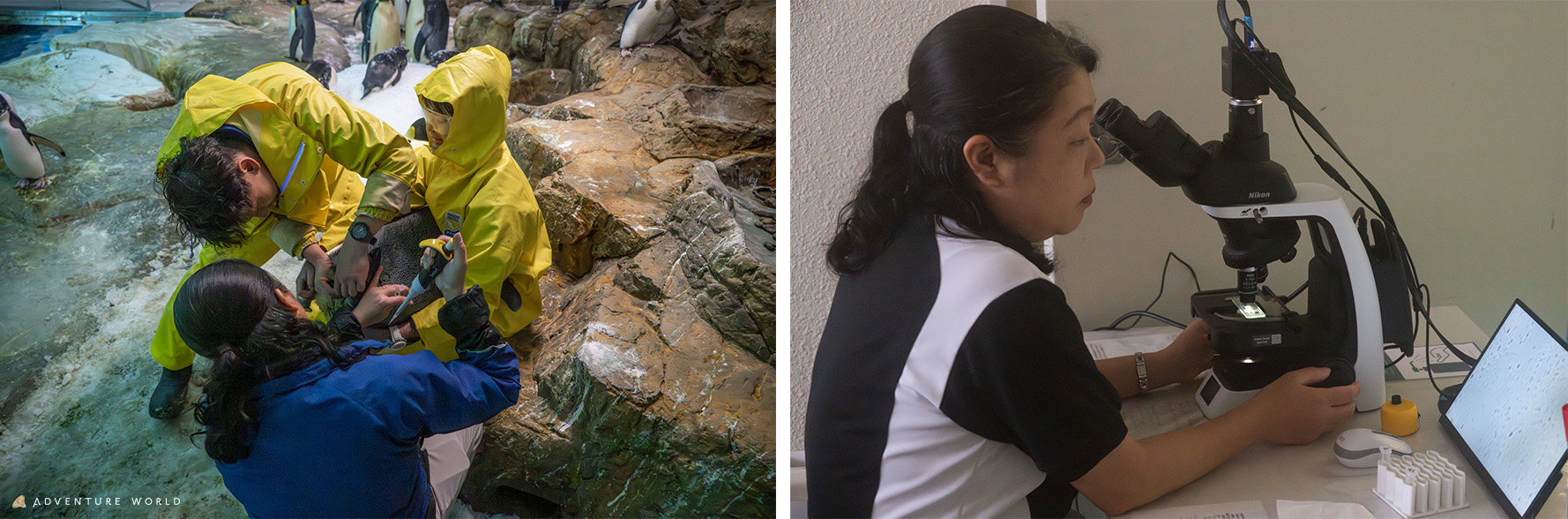
当パークでは自然繁殖のサポートだけでなく、飼育下における遺伝的多様性の維持に向けた繁殖研究として、2024年より人工授精プロジェクトに挑戦しています。昨年(2025年)には人工授精によって、世界で初めて(当パーク調べ)となる有精卵を確認しました。残念ながら卵殻に異常が見られ、発生が途中で止まってしまいましたが、世界的に見ても大きな一歩となりました。今シーズンにつきましても、すでにオスの「E007」から精子を採取し、メスの「E004」へ注入する人工授精を実施いたしました。産卵予測時期に合わせて精液を複数回注入し、受精確率を高める最善の努力を行っています。最適な注入量やタイミングを含め現在も研究途上ではありますが、 今後の経過を慎重に見守ります。今後もシーズンを通して、ペンギンたちの状態を最優先に見極めながら、採精と人工授精のチャレンジを継続してまいります。
■ Nurture life with your ideas and skills. We’re calling for entries to design a “Penguin Mask for Early Rearing”!
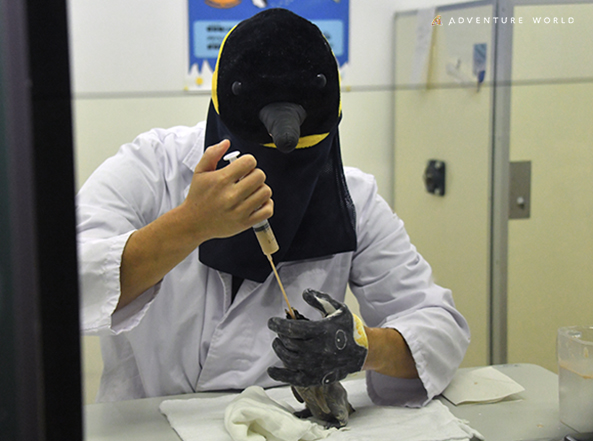
At our park, when natural incubation or rearing by parent birds is difficult, our staff perform “early artificial rearing, ” in which they act as surrogate parents to raise the chicks.To prevent “imprinting” (where the chicks mistake humans for their parents), staff wear “masks” modeled after penguins when feeding them. Until now, staff have been making these masks by hand, but we’ve faced challenges such as “restricted vision,” “poor ventilation making them uncomfortable,” and “the need for a more realistic texture.” As a new step toward the “38°C MIRACLE Project’s” goal of “protecting wildlife as a society,” we are now seeking creators for these penguin masks. Whether you’re skilled in sculpting or sewing, know of breathable materials, or have ideas on how to improve the design for ease of use, why not put your expertise and ideas to work in the field of animal welfare and conservation?We welcome applications from professionals and amateurs, individuals and organizations alike. We look forward to your warm support and participation as we work together to nurture future lives.
Details regarding how to apply will be announced at a later date.