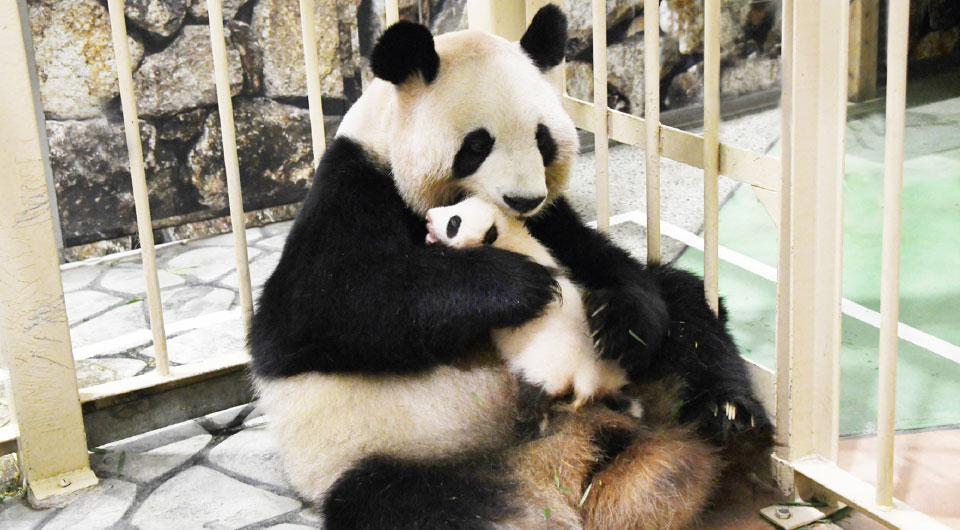
The main reason why giant pandas have trouble breeding is that their mating period is super short, only 2 to 3 days each year!
1. Signs of Estrus
We've divided the giant panda estrus period into three stages: early, mid, and peak, and we collect information on various estrus signs and behaviors (Table 1). For 10 successful mating cases between February and June from 2001 to 2020, we categorized the estrus stages for both males and females (Table 2). Taking the first day of mating as day 0, we looked back at the dates when different estrus signs were observed (average ± standard deviation). The mid and peak estrus stages for males and females are pretty much in sync, but the early estrus stage for females appears about one month before mating, while for males, it's two to three months before mating.
-
Table 1. Classification of Estrus Stages
Estrus Stage Estrus Signs and Behaviors メス Early Estrus Marking, bathing, vulva stage 1 Mid-Estrus Roaring, showing interest in males, vulva stage 2 Vaginal mucosal keratinocytes increase, and estrus hormone levels rise. Peak estrus period Genital swelling reaches level 3, and estrus hormone levels drop from their peak. Shows interest in males → Mating Male Early Estrus Marks territory, takes water baths Mid-Estrus Roars, shows interest in females Peak estrus period Shows strong interest in females, masturbates → Mating -
Table 2. Time of estrus signs appearing at each stage
Early Estrus Mid-Estrus Peak estrus period Female −20.0±12.2 days -7.6±1.4 days −0.6±0.8 days Male −2~3 months -6.3±2.0 days -2.4±1.9 days ※Day 0 is the first day of mating. n=7
Glossary and More
- Genital swelling level: Divided into 1-3 levels based on color and swelling.
- Roaring: A special sound made during estrus.
- Vaginal Mucosal Cells: Our park counts cells found in urine after Papanicolaou staining, categorizing them as blue nucleated, red nucleated, or anucleated cells.
- Estrus hormone: Our park measures the amount of Estrone-3-Glucuronide (E1G), one of the estrogen metabolites in urine.
2. Pinpointing the Mating Period
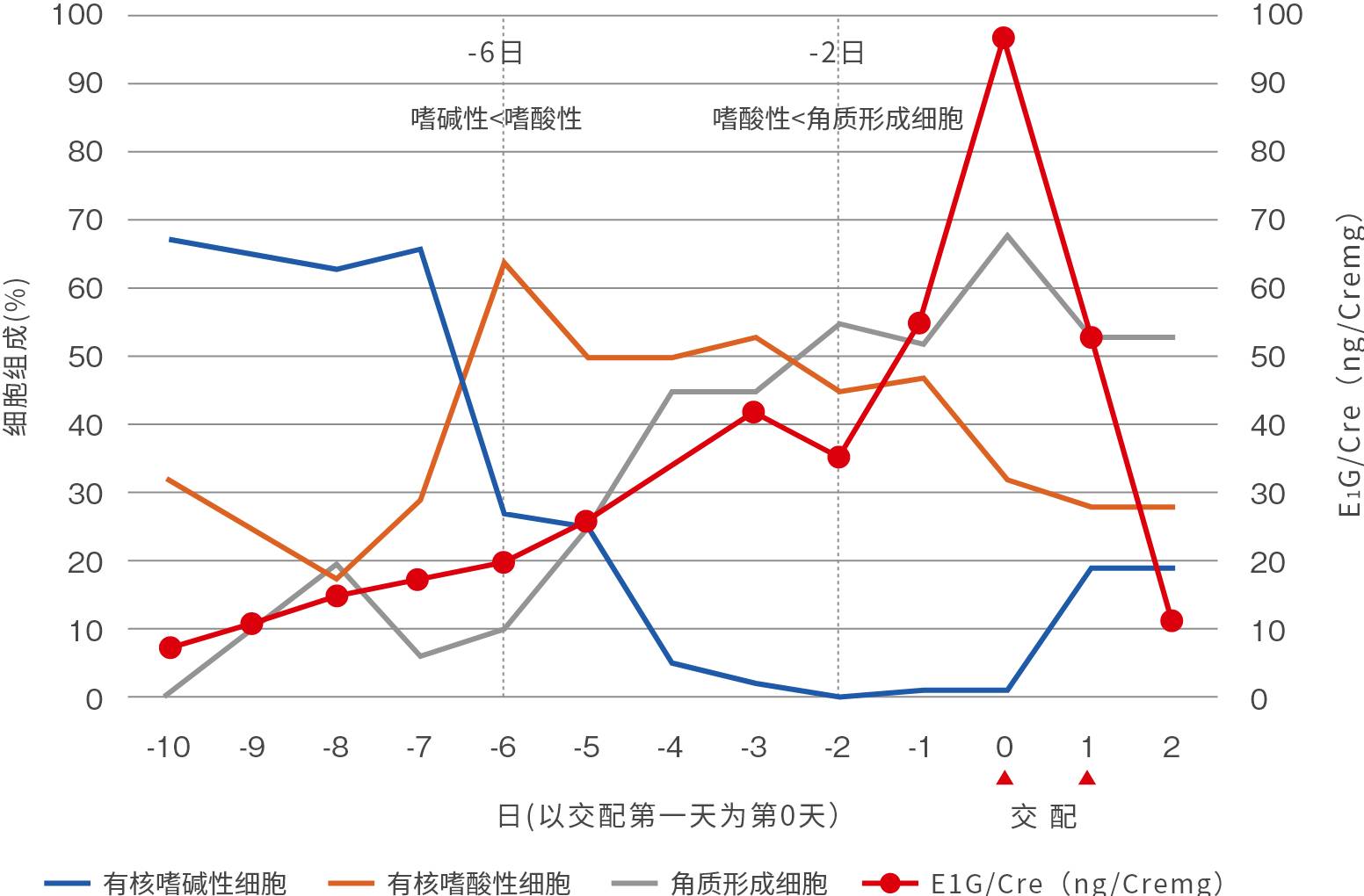
We summarized the estrus signs and E1G level changes for "Rauhin" in 2020 (Figure 1). Before the peak estrus period, we confirmed that Rauhin showed increased E1G levels, more roaring, and swelling and redness in her genital area. Finally, after the male and female pandas roared at each other and the female displayed inviting behavior by turning her rear towards the male and lifting her tail, we allowed the two pandas to cohabitate, and successful mating occurred. Reports indicate that a giant panda's ovulation period is when estrus hormone levels sharply drop from their peak, so the 2020 mating time also aligned with the ovulation period. Babara et al. (2003) collected cells from vaginal swabs and classified them into nucleated basophilic, nucleated eosinophilic, and anucleated keratinized cells using Papanicolaou staining. Their report stated that about one week before mating, basophilic and eosinophilic cells crossed over, and 2-3 days before mating, the proportion of keratinized cells exceeded other cells, allowing for effective prediction of the suitable mating period in advance. To reduce the burden on the giant pandas, our park did not directly collect vaginal mucosal cells from the vagina but instead observed exfoliated cells discharged with urine. The changes in "Rauhin's" vaginal mucosal cells (Figure 2) showed that eosinophilic cells and keratinized cells were dominant 6 days and 2 days before mating, respectively, and the exfoliated cells discharged with urine also showed the same results.
Exfoliated vaginal mucosal cells discharged with urine (Papanicolaou staining method)
-
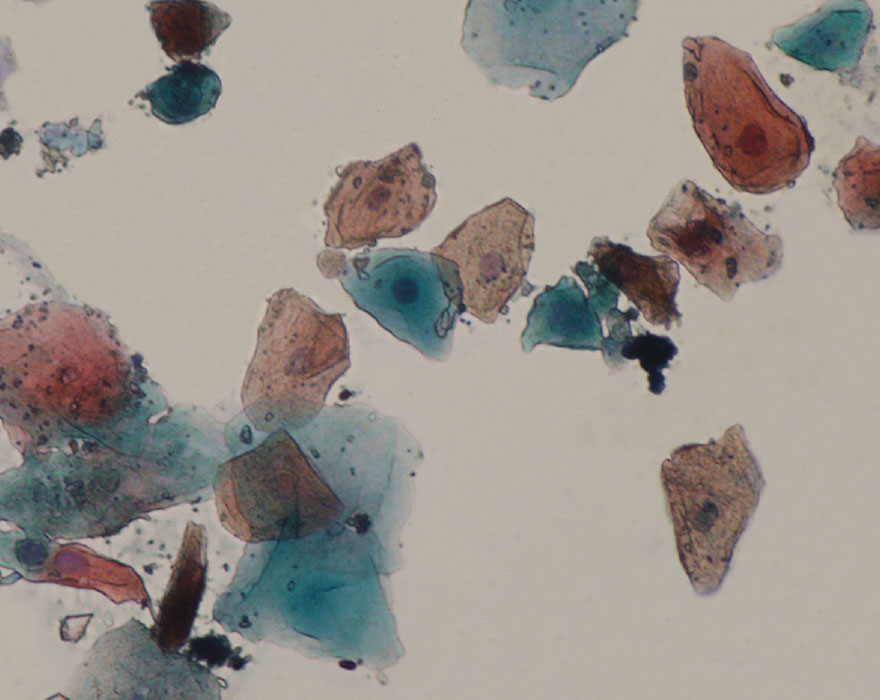
Mid-estrus (nucleated basophilic cells and nucleated eosinophilic cells)
-
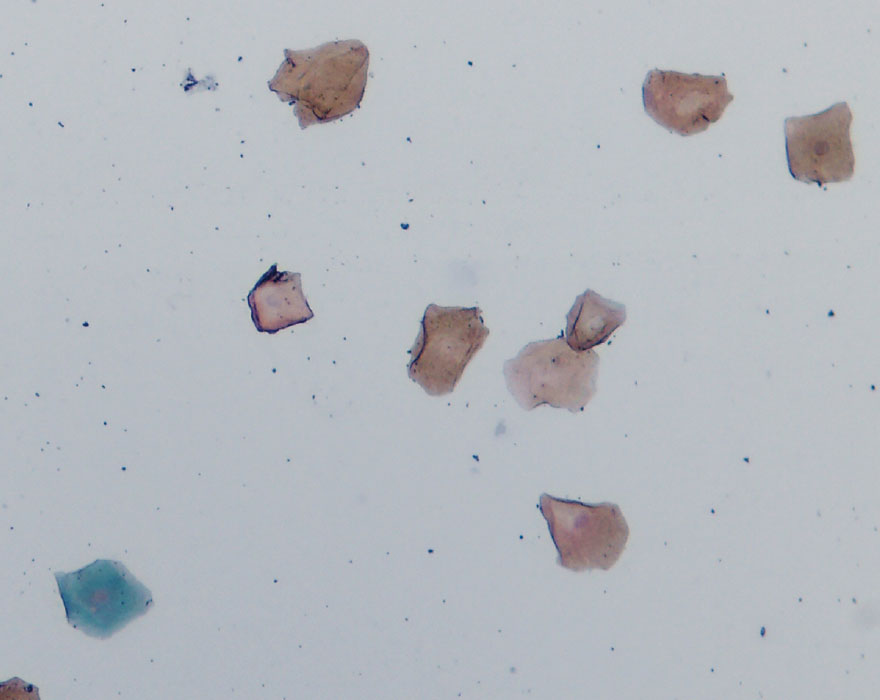
Peak estrus (anucleated keratinized cells dominant)
Figure 1: Changes in estrus signs and urinary E1G levels (Rauhin, 2020)
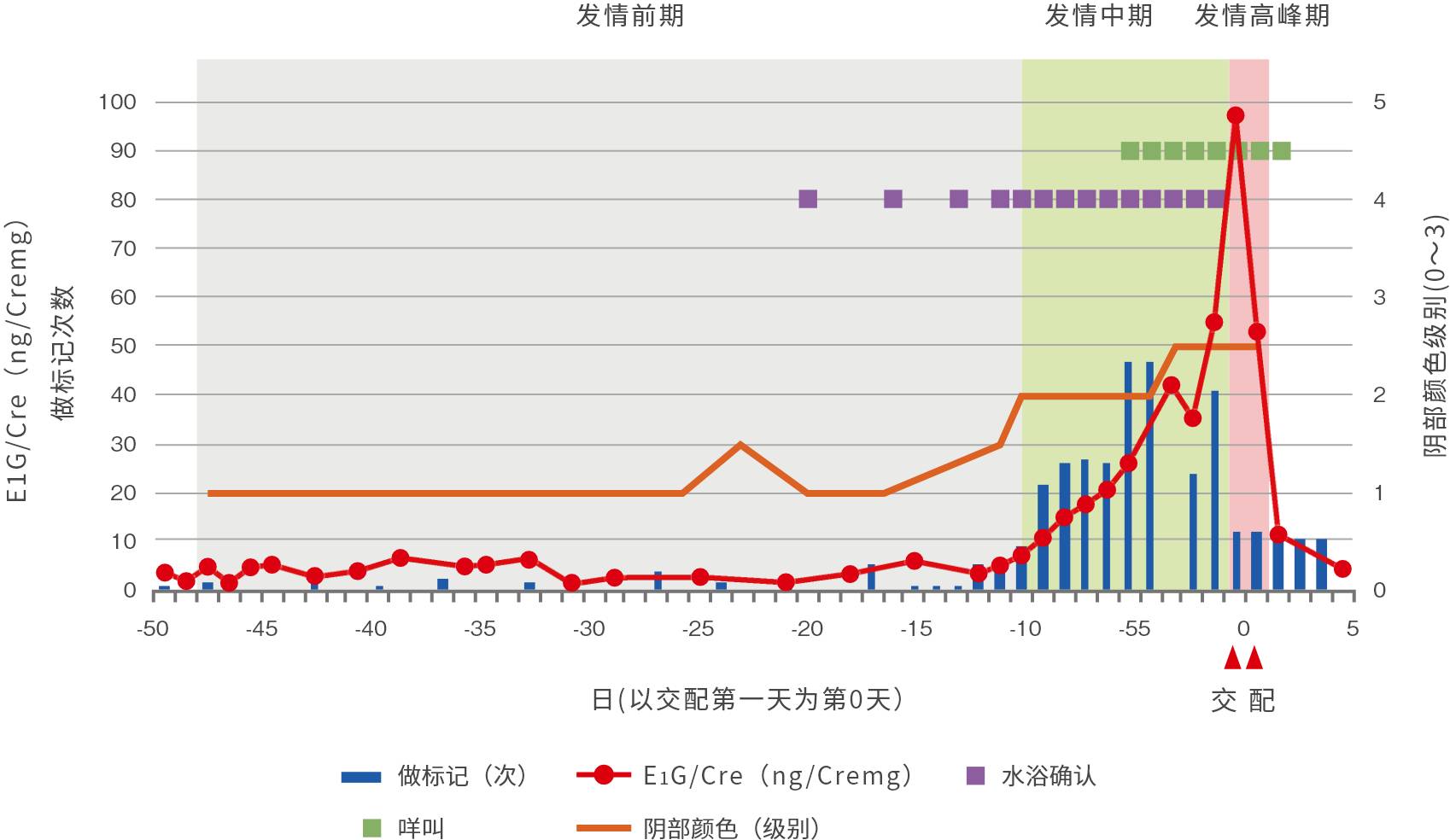
Figure 2: Changes in urinary vaginal mucosal cells and E1G (Rauhin, 2020)
3. Mating Status
At Adventure World Shirahama, we always prioritize natural mating. Our goal is to get the male and female pandas' estrus periods to sync up. So, from winter to spring, we often switch their exercise areas and let them sniff each other's droppings and scent marks. Between 2001 and 2020, we observed 14 mating attempts. Natural mating was always our first choice. Only in three cases (2001, 2006, and 2008) did we also use artificial insemination because the male lost interest even though the female was still in estrus. Out of those 14 attempts, 11 resulted in births, which is a great conception rate of 78.6%! Lately, we've also been seeing more issues with our breeding-capable giant pandas getting older. For example, with our male panda 'Eimei,' after 2016 (when he was 24), we started minimizing the time he spent seeing females through a fence and gave him mating breaks of 7 hours or more. This helped him save his energy for mating.
Mating Status of Giant Pandas at Adventure World Shirahama
| Female | Male | Mating Date | Mating Method | Birth | ||
|---|---|---|---|---|---|---|
| Year | Date | Natural Mating | Artificial Insemination | |||
| Meimei | 永明 | 2001年 | September 13-15 | 7次 | 2次 | Confirmed |
| 2003年 | May 21-23 | 6次 | - | Confirmed | ||
| 2005年 | April 4-6 | 6次 | - | Confirmed | ||
| 2006年 | August 26-28 | 4次 | 2次 | Confirmed | ||
| 2008年 | May 29-30 | 6次 | - | - | ||
| 2008年 | September 15-16 | 1次 | 1次 | - | ||
| good beach | 永明 | 2007年 | February 20 | 2次 | - | - |
| 2008年 | April 27-28 | 3次 | - | Confirmed | ||
| 2010年 | March 27-28 | 3次 | - | Confirmed | ||
| 2010年 | March 31 - April 3 | 5次 | - | Confirmed | ||
| 2014年 | July 17-19 | 5次 | - | Confirmed | ||
| 2016年 | May 26-28 | 6次 | - | Confirmed | ||
| 2018年 | April 6-9 | 6次 | - | Confirmed | ||
| 2020年 | June 11-12 | 5次 | - | Confirmed | ||